
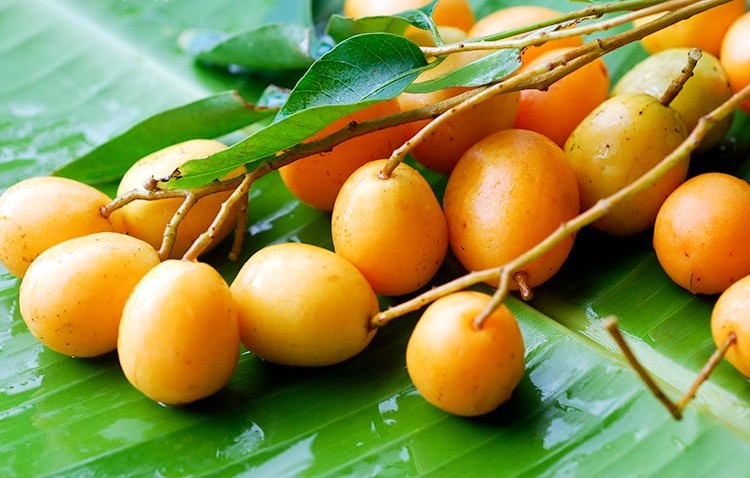
Did you know that the wood of Spondias mombin is so termite-resistant that even termites know better than to chew it. It’s nature’s way of saying, “Pick on someone your own size.”Hahaha!
Medicinal Uses
For generations, Spondias mombin has been a trusted part of traditional healing systems across West Africa, Central America, and the Caribbean. Every part of the tree has a purpose. The bark is commonly boiled into a decoction to treat diarrhea, sore throat, postpartum bleeding and premature ejaculation and impotence in men. The leaves are used for wound healing, eye infections, fever and inflammatory conditions. Together with the root, the leaves are used for malaria and urinary tract infections while the fruits are eaten fresh or fermented to ease digestive troubles.
Modern research has validated several of the traditional claims surrounding Spondias mombin. Its phytochemical richness, especially in flavonoids, tannins, alkaloids, saponins, and phenolic acids, accounts for a wide range of biological effects.
Extracts from the bark, leaves, and fruits show potent action against various microbial pathogens: viruses, fungi and bacteria alike, supporting its traditional use in wound and infection management
Ethanolic extracts have demonstrated anti-inflammatory effects by reducing oedema and pain in animal models. This supports its use in conditions involving swelling, joint pain, and inflammation-related fatigue.
Extracts of S. mombin show protective effects on the gastric mucosa, reducing ulcer formation induced by ethanol, NSAIDs, and stress. This supports its traditional use in managing peptic ulcer, stomach pain, dysentery and digestive discomfort.
Leaf and bark extracts protect the liver against chemical-induced damage by boosting antioxidant enzymes and reducing lipid peroxidation
Experimental studies indicate potential in reducing seizure frequency and neuronal oxidative damage, suggesting its relevance in neurodegenerative and anxiety-related conditions.
From folk medicine to modern research, yellow mombin stands as a plant of resilience and healing. Its leaves, bark, and fruit have served generations in managing infections, inflammation, ulcers, and liver ailments.
Connection to Thorntina-74 (T-74)
Thorntina-74 blends hog plum with moringa and prekese into one powerful formula. Inspired by the powerful synergy of nature and science, Thorntina-74 draws upon the antimicrobial, gastroprotective and neuroprotective properties of Spondias, the cardiovascular and anti-inflammatory properties of prekese and the nutrient density of Moringa to support holistic wellness. Together, these plants make T-74 a strong reflection of both traditional knowledge and scientific validation.
REFERENCES:
Ogunro, O. B., Oyeyinka, B. O., Gyebi, G. A., & Batiha, G. E. S. (2023). Nutritional benefits, ethnomedicinal uses, phytochemistry, pharmacological properties and toxicity of Spondias mombin Linn: a comprehensive review. Journal of Pharmacy and Pharmacology, 75(2), 162-226.
de Freitas, J. S., Novo, A. D. A., Kunigami, C. N., Moreira, D. D. L., Freitas, S. P., da Matta, V. M., ... & Ribeiro, L. D. O. (2024). Spondias tuberosa and Spondias mombin: Nutritional Composition, Bioactive Compounds, Biological Activity and Technological Applications. Resources, 13(5), 68.
Brito, S. A., Barbosa, I. S., de Almeida, C. L., de Medeiros, J. W., Silva Neto, J. C., Rolim, L. A., ... & Wanderley, A. G. (2018). Evaluation of gastroprotective and ulcer healing activities of yellow mombin juice from Spondias mombin L. PloS one, 13(11), e0201561.
421 University Street,
Sowutuom, Accra Ghana
GPS: GC-005-3083.
Phone: +233 501 628 931
+233 24 6073 498
E-mail: info@dhi.com.gh
Website: www.dhi.com.gh