
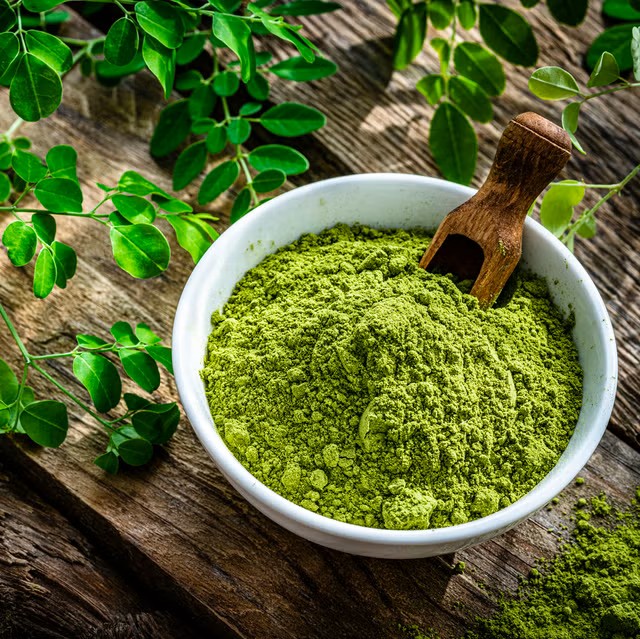
Did you know NASA once considered Moringa as a candidate food crop for space travel? Oh yeah! Due to its nutrient density and fast growth in different conditions.
Nutritional support
Moringa leaves can be referred to as the “natural super multi vitamin.” M. oleifera provides more than seven times (7x) the vitamin C found in oranges, 10 times (10x) the vitamin A found in carrots, 17 times (17x) the calcium found in milk, 15 times (15x) the potassium found in bananas, 25 times (25x) the iron found in spinach and nine times (9x) the protein found in yogurt, a type which can compete with the likes of soybean. For this reason, they are used to combat malnutrition, especially in children and nursing mothers. Regular consumption strengthens immunity and supports growth.
Beside the nutritional importance, Moringa is known to have great medicinal properties in folkloric medicine. These includes their use for boosting breast milk production, aiding in fertility and treating, lethargy, cancers, rheumatism, joint pain, Diabetes, microbial infections and for promoting general health.
Folkloric knowledge isn’t all there is about Moringa, there is scientific evidence of it’s medicinal potential. Below are some bioactivities proven of Moringa.
The plant is rich in flavonoids and phenolic acids, which are natural compounds that neutralize free radicals. By reducing oxidative stress, Moringa helps protect tissues from damage. Its anti-inflammatory action has been linked to relief of conditions such as arthritis, joint pain, and chronic inflammatory disorders.
Extracts from Moringa leaves and seeds show activity against several bacteria and fungi, including Escherichia coli, Staphylococcus aureus, and Candida albicans. This supports its use in traditional medicine for treating infections of the skin, digestive tract, and urinary system. Some studies report antiviral effects of Moringa extracts, particularly against herpes simplex virus and Epstein–Barr virus. The mechanisms include interference with viral replication and strengthening of host immune response. Though early, these results suggest a role in managing viral infections.
Research has highlighted Moringa’s role in controlling blood sugar and blood pressure. Leaf extracts improve glucose tolerance and reduce lipid levels, making them useful for people managing diabetes, hypertension, and high cholesterol. These effects are tied to compounds such as quercetin and chlorogenic acid.
Compounds such as niazimicin and benzyl isothiocyanate found in moringa have shown activity against tumour development in laboratory studies. They inhibit cancer cell proliferation and may prevent the initiation of certain cancers by blocking carcinogen activation.
Moringa leaf extracts stimulate immune cell activity and enhance antibody production. These effects improve the body’s natural defense mechanisms and may explain its use in traditional medicine to boost resistance against recurrent infections.
Applied topically, Moringa preparations promote faster wound closure and reduce microbial contamination. The oil from its seeds is used in skin care for its moisturizing and protective properties.
Studies in both animals and humans support many of these traditional claims. Antioxidant, anti-inflammatory, and metabolic effects are well documented. Immunomodulatory, hepatoprotective, anticarcinogenic, and antiviral activities are backed by promising laboratory and animal data. Moringa oleifera combines nutritional and medicinal benefits, making it one of the most versatile plants in natural medicine. These properties provide a strong foundation for its inclusion in Thorntina-74.
REFERENCES
DeMattio, Deanna; McGuire, Nick; Rosa Polonia, Ruben A.; and Hufendick, Benjamin T. (2020) "Project HOME Hydroponic Operations for Mars Exploration," Beyond: Undergraduate Research Journal: Vol. 4 , Article 5.
Gopalakrishnan, L., Doriya, K., & Kumar, D. S. (2016). Moringa oleifera: A review on nutritive importance and its medicinal application. Food science and human wellness, 5(2), 49-56.
Rockwood, J. L., Anderson, B. G., & Casamatta, D. A. (2013). Potential uses of Moringa oleifera and an examination of antibiotic efficacy conferred by M. oleifera seed and leaf extracts using crude extraction techniques available to underserved indigenous populations. International Journal of Phytotherapy Research, 3(2), 61-71.
Stohs, S. J., & Hartman, M. J. (2015). Review of the safety and efficacy of Moringa oleifera. Phytotherapy Research, 29(6), 796-804.
421 University Street,
Sowutuom, Accra Ghana
GPS: GC-005-3083.
Phone: +233 501 628 931
+233 24 6073 498
E-mail: info@dhi.com.gh
Website: www.dhi.com.gh